Gaming for the Story: Top Picks for Non-Competitive Players

Not all gamers play games to climb ranks or win through quick reflexes.

There are times when you just want to sit back, relax, and enjoy a story that unfolds as you play through it. This is where story-driven games really shine.

They focus on characters, choices, and emotional depth rather than constant pressure. Even when combat is involved in these games, it does not take center stage; it is only a tool to help the story progress further, enriching the storyline.

Why Story-Driven Games Feel Different

Story-driven games provide a space for you to interact and engage in a game without the need to constantly compete or react to your opponents.

You explore the game environment, listen to conversations, and make decisions that will affect the story.

Another factor is the element of choice. In most story-driven games, your choices will affect your relationship with a certain character or will affect the story or ending.

Detroit: Become Human: A Web of Choices

Detroit: Become Human is one of the clearest examples of branching storytelling done right. Set in a future where androids live among humans, Detroit follows three characters whose stories intersect in meaningful ways.

The thing that stands out is the impact of your decisions on the story. Big decisions can take the game on a completely different path, while smaller decisions add a bit of variation.

It’s not really about difficulty but rather the consequences of your decisions. If you like choice-driven storytelling in gaming, then Detroit is a stellar option.

Life is Strange: Quiet, Emotional Storytelling

There are only a few games that handle emotions as well as the storytelling of Life is Strange. You play the game as Max, a student with the ability to rewind time.

The game is not really about the powers but rather the connections and the decisions you make. The game takes its time to let you explore the situations and connections you make.

It’s a unique game, especially with the rewind ability. However, it’s the way the game makes you connect with the story and the characters that leaves the biggest impression.

Until Dawn: Interactive Horror With Consequences

Until Dawn delivers that experience. Set in a remote mountain lodge, it follows a group of friends facing a night full of danger.

Your decisions in the game can lead to a butterfly effect, which means that your decisions can affect who lives or dies.

In addition to decisions, QTE is another key aspect of the game. If a player misses a QTE, it can drastically affect the character’s story.

This blend makes Until Dawn highly engaging without the stress of being mechanically challenging.

Red Dead Redemption 2: A World That Feels Alive

Red Dead Redemption 2 is a game that provides a more detailed approach to a storyline. In Red Dead Redemption 2, you take on the role of Arthur Morgan – an outlaw in the fictional world.

The story unfolds gradually, through missions, camp interactions, and quiet moments.

Even though there is a combat aspect to the game, it is never brought to the forefront. In addition, honor is a key aspect of the game. It influences the way the other characters interact with you and can affect the ending.

And this is precisely what makes Red Dead Redemption 2 so memorable for non-competitive gamers.

Ghost of Tsushima: Story Meets Skill

Ghost of Tsushima blends cinematic storytelling with open-world exploration. You play as Jin Sakai during the Mongol invasion, struggling between tradition and survival.

The game offers a good deal of freedom. You can immerse yourself in the story, take your time exploring, or jump into fights as you see fit.

The difficulty settings further adjust the experience; combat can be either a casual affair or a real test, depending on what you select. This flexibility is what makes Ghost of Tsushima appealing, providing depth without forcing players to hurry through the narrative.

Horizon Zero Dawn: Discovery Through Exploration

Horizon Zero Dawn looks like an action-heavy game, but its story is what draws players in. You follow Aloy as she uncovers the truth behind a world filled with robotic creatures.

As far as storytelling is concerned, the game does it through exploration. Audio logs, ruins, and environmental details slowly reveal the past.

Though the game does include fighting and crafting, it does provide the player with the opportunity to engage with the game’s storytelling.

It is the sense of discovery that keeps the game of Horizon Zero Dawn engaging and memorable.

Final Thoughts

Story-based games are a reminder that gaming is not always about the end goal of winning, but about the experience of playing and learning something new in your own time.

Whether you are controlling the outcome in Detroit, reflecting on your experience in Life is Strange, or exploring the open world in Red Dead Redemption 2, these games have so much more to offer than just the competitive aspect of gaming.

 

Hardest Games of 2026: A Real Test of Skill and Patience


Understanding Difficulty in Games

Before we dive into the list, let’s take a moment to understand what makes these games the way they are. Is it simply the fact that the enemies have more health or deal more damage? Not really. It’s about how the game teaches you, how it punishes mistakes, and how it rewards persistence.

Some of these games require precision, timing, or even procedural generation, like most roguelike games, where the experience is unique every time. Then, of course, there are the soulslike games, where learning the patterns of the enemies becomes the skill.

After all, the best challenging games are the ones where victory feels earned.

The 10 Hardest Games of 2026

    Black Myth: Wukong

    The first game on this list is Black Myth: Wukong. The game blends cinematic storytelling with hardcore gameplay. Boss fights are tough, and it usually takes a few tries before you start picking up the patterns. It doesn’t hold your hand, and that’s exactly why it stands out among the hardest games of the year.

    Elden Ring: Shadow of the Erdtree

    This expansion builds on one of the most iconic soulslike experiences. The scale and difficulty have only increased. While exploration is still integral, the enemies are smarter, faster, and much less forgiving.

    Hollow Knight: Silksong

    If it lands as expected, Silksong continues the legacy of tight platforming and challenging boss fights. You need to be precise here, and even small mistakes can set you back. It’s the kind of game where every bit of progress actually feels rewarding.

    Returnal (Ongoing Relevance)

    Even in 2026, Returnal is one of the hardest games out there. The game’s speed, bullets, and permadeath ensure players keep playing, even when it gets exhausting. Each run feels like a marathon.

    Spelunky 2

    Few roguelike games are as consistently brutal as Spelunky 2. Randomized levels mean you can’t rely on memory alone. You have to adapt constantly. The main challenge comes from its unpredictability.

    Code Vein 2

    Building on its predecessor, Code Vein 2 pushes deeper into soulslike territory. Boss fights are longer, patterns are more complex, and builds matter more than ever. If you don’t learn, you don’t progress. It’s that simple.

    Phantom Blade Zero

    With fast-paced combat and tight timing, Phantom Blade Zero mixes stylish action with punishing mechanics. It may look smooth, but players still need to be precise. Enemies don’t give you any breathing space, and mistakes get punished quickly.

    Cairn

    The Cairn game stands out for a different kind of difficulty. Instead of combat, it focuses on climbing mechanics where every movement matters. One slip can send you all the way down. It’s quiet, tense, and surprisingly unforgiving.

    Resident Evil (Modern Entries)

    With limited ammo, aggressive enemies, and tense environments, the difficulty levels in these new entries have only increased. The game is no longer about shooting—it’s all about surviving.

    Pokémon Roguelike

    This popular twist on the traditional format is a Pokémon game turned into a survival-style mode. A pokémon roguelike is a game where every battle is important because of limited resources and the unpredictability of your team. It’s not just nostalgia—it’s strategy, where a wrong turn can completely ruin your chances.

Why Players Keep Coming Back to Hard Games

You’d think people would avoid frustrating games, but that cannot be further from the truth. There’s something deeply satisfying about overcoming a challenge that once felt impossible.

In roguelike games, each run teaches you something new. In Soulslikes, every boss fight helps you improve. In platformers, even small improvements make a real difference.

It’s not about winning easily—it’s about earning it.

Final Thoughts

The toughest games of 2026 are not made difficult simply for the sake of being difficult. They are made difficult as a way of challenging the player, testing the player, and ultimately rewarding the player.

Whether you’re navigating a treacherous world in Phantom Blade Zero, surviving runs in Spelunky 2, or simply testing your patience with a pokémon roguelike, these games offer something unique: the sense of real achievement.

And once you experience that feeling, it’s hard to go back to anything less.

PS5 March 2026 Update Explained

Most PS5 updates come and go without much discussion. You install them, maybe notice a small UI shift, then move on. This PS5 update feels a bit different and is definitely worth talking about.

The 26.02-13.00.00 brings back a hint of what made older PlayStation systems feel more personal. Think back to the PS4 and specifically the PS3 era, when themes and small system changes actually stood out. Sony doesn’t appear to be fully returning to that, but there’s a similar direction here. The most important upgrade sits under the hood with PSSR, and then a few visible tweaks around customisation.

PSSR Upgrade Is the Primary Change in This PS5 Update

The only part of this update that really touches your games is the software patch to PSSR ( PlayStation Spectral Super Resolution). If you’re using a PS5 Pro, this is where things actually change.

Image quality gets a noticeable lift. Edges look cleaner, textures hold up better, and there’s less shimmer when scenes move quickly. It’s not dramatic in every moment, but in detailed environments, the difference starts to show after a bit of playtime.

Some games are already taking advantage of it. Titles like Resident Evil Requiem, Final Fantasy VII Rebirth, Silent Hill f, and Alan Wake II are among the early ones where this improvement is visible. Sony is also pushing support to more games over the next few months, so this isn’t a one-off update tied to a small list.

There are a few limits to keep in mind. It’s only available on PS5 Pro, and it only works in games that support it. You can also toggle it manually in settings under video output if you want to compare.

Customization Update

Welcome Hub changes: The biggest shift shows up here. Slideshow Mode lets you pull images from your Media Gallery and turn them into a rotating background when the console is idle. You can tweak how they transition and how long they stay on screen. It’s a small feature, but after a while, the home screen stops feeling static. Custom backgrounds also get more flexibility, even if it’s still not full PS3-style themes.

There’s also a new Showcase Mode that displays a full view of your Welcome hub background when your PS5 is idle. When activated, your Welcome hub automatically enters this mode after a period of inactivity, and you can customise exactly how long that wait time is. Users can also press L3 to instantly switch into this mode.

Messaging updates: New emoji support is part of the update. It works as expected, but most people won’t notice this unless they use messages often.

Stability improvements: General fixes are included, though nothing specific stands out. You’ll only feel this if something was off earlier.

Closing Thoughts

Most of this update sits on the surface, and you’ll likely stop noticing it after a few days. The PSSR upgrade is the only part that feels like it’s building toward something bigger. Going forward, more control over themes and deeper customisation would make a real difference, especially for anyone who misses how personal older PlayStation systems felt.

Disclaimer:

The content on this blog is for informational and educational purposes only. While we aim to provide accurate information, we can’t guarantee its completeness or accuracy. The views expressed are those of the authors and may not reflect those of the blog.

References:

https://www.playstation.com/en-in/support/hardware/ps5/system-software/

https://www.gamingbible.com/news/platform/playstation/ps5-system-update-themes-640440-20260317

https://blog.playstation.com/2026/03/16/upgraded-pssr-rolling-out-to-silent-hill-f-monster-hunter-wilds-final-fantasy-vii-rebirth-crimson-desert-and-more/

https://gamerant.com/ps5-console-update-march-2026-patch-notes/

PS5 Update Out Now for Base Console Feature & PS5 Pro PSSR 2

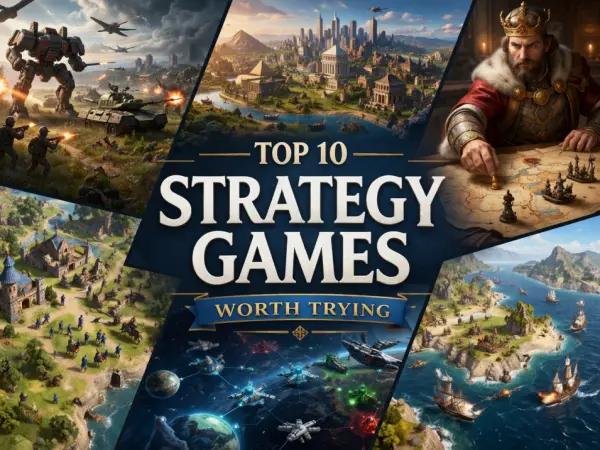
Games Like Clash of Clans: Top 10 Strategy Games Worth Trying

Clash of Clans has been enormously popular for years because it gets the fundamentals right.

The rewarding base building, attacks that are quick and strategic, and the progress that keeps pulling you back, even for short playing sessions.

For many players, though, the core loop starts to feel familiar after a point. That’s where similar games come in. We’ve rounded up ten options that keep the same foundation but add their own twists, pacing, and play styles.

1. Gods of Olympus

Gods of Olympus keep the familiar base attack loop, but change how battles feel. You directly control gods like Zeus or Athena during combat instead of just deploying troops and watching. Attacks feel more hands-on, with abilities triggered in real time. There are no build timers either, so progress moves faster than expected. The lack of downtime feels great at first, but the grind shifts into constant upgrades, resource farming, and event grinding. Progress depends heavily on upgrades and resources from battles.

2. Stellaris: Galaxy Command

Enter a space setting where base building moves beyond a single map. Stellaris: Galaxy Command puts you in control of a station while you build fleets and expand into a shared galaxy with other players. Alliances and territory control influence progress at every step. The scale feels larger than most mobile strategy games, and decisions start to matter more as you compete for control across different regions.

3. Clash Royale

Clash Royale drops the base building completely and goes straight into high‑pressure PvP fights that can swing in seconds. One match feels easy, the next one humbles you fast. You build a deck, throw units on the field, and hope your timing doesn’t fall apart under pressure. Some games feel perfectly controlled, others turn chaotic out of nowhere. It’s simple to get into, but staying consistent is where most players struggle.

4. Rusted Warfare

Rusted Warfare feels like an old-school RTS dropped onto your phone with almost no compromises. You build bases, manage a single resource, and control land, air, and naval units while battles scale up fast. Things get intense once armies grow, but that’s also where it really shines. Even with a lot happening on screen, the game stays stable and responsive. As a fair warning, we have to add that it’s not beginner-friendly, and mistakes get punished quickly.

5. Art of Conquest: Airships

Art of Conquest: Airships drops you into a large open map where you move between cities, fight roaming enemies, and run into other players doing the same. It still fits the strategy games Android space, but the flow feels less static than typical base-building games. Battles need input, especially when using hero abilities at the right moment.

6. Lords Mobile

Lords Mobile is one of the biggest games like Clash of Clans. In the game, you’re not just managing a kingdom; you’re dealing with guild politics, large PvP fights, and constant events running in the background. Heroes matter a lot, especially in battles and side modes. It can feel crowded with systems, but for players who stay active, it offers more to do than most games in this space.

7. Honor of Kings

Honor of Kings goes in a different direction compared to most. Instead of long upgrades or slow progression, everything happens inside short 5v5 matches. You pick a hero, learn their skills, and rely on team coordination more than anything else. Matches can feel intense or completely one-sided depending on teammates.

8. Rise of Kingdoms

Rise of Kingdoms feels far more active once you get into it. Armies move across a live map instead of staying in one place, so you’re constantly reacting to other players. Fights rarely stay clean. One-on-one turns into a group clash when allies join in, and you either pull back or get surrounded. It leans more toward war strategy games, where positioning and timing matter a lot.

9. Call of Dragons

Call of Dragons drops you into a fantasy map where the terrain actually changes how fights play out. Units don’t move the same everywhere, and positioning starts to matter more than expected. Large battles can get chaotic once alliances join in, and it’s not always easy to pull out cleanly. The game adds enough variation through map design and creatures to keep it from feeling predictable.

10. Whiteout Survival

Whiteout Survival changes the setting completely, but keeps the pressure constant. You’re managing survivors in freezing conditions where resource decisions start to matter quickly. Assigning roles isn’t just a side system; it directly affects how well your settlement holds up. Outside threats don’t wait, and other players add another layer of tension.

Conclusion

There are plenty of empire-building games beyond this list, and many bring their own spin on progression, combat, or pacing. The ones here stand out because they stay engaging over time without feeling identical. If you’ve spent hours on a game clash like Clash of Clans and want something different without losing that core loop, these are all worth trying at least once.

Disclaimer

Disclaimer: The content on this blog is for informational and educational purposes only. While we aim to provide accurate information, we can’t guarantee its completeness or accuracy. The views expressed are those of the authors and may not reflect those of the blog.

A Guide to Gamer Health: Fitness & Mental Wellness Tips

Gaming is not just about fast reflexes and low ping; it is a full-body and mind experience. Long periods of sitting, intense focus, and doing the same thing over and over can have a negative effect on posture, vision, mental stamina, and overall health if not managed properly. Gamers can boost their performance, reaction time, endurance, and enjoyment without hurting their long-term health by treating their physical and mental health as a hidden power-up. This guide shows gamers how to find a balance between playing games and staying fit, recovering, and staying focused.

The Foundations of Gamer Health

It is necessary to be aware of the essential pillars that directly influence gaming performance and wellness before establishing better habits.

Gaming Posture

The correct posture helps to minimize the tension on the neck, shoulders, back, and wrists. Proper sitting position; lumbar support, relaxed shoulders, and flat feet on the floor will help to avoid chronic pain and repetitive strain injuries.

Example:

The Cleveland Clinic Esports Health Guide says that bad posture is one of the main reasons gamers get neck and back pain. It suggests keeping your spine in a neutral position and checking your posture regularly during long sessions.

PC Gaming Setup & Ergonomics

When a properly designed PC gaming environment is used, your monitor will be mounted at your eye level, keyboard and mouse at your elbow level, and the positioning of your arms and wrists will be natural. A gaming room setup should be ergonomic to allow more time without any fatigue.

Example:

For example, the Cleveland Clinic’s esports medicine program says that changing the height of your monitor and the lumbar support on your chair can help a lot with neck strain and wrist overuse injuries, especially when you play games or practice esports for several hours at a time.

Physical Activity

Gaming is inactive, and one must move. Regular exercise and short stretch breaks enhance circulation, muscle balance, and endurance, which directly affect reaction time and comfort.

Example:

For example, a Red Bull esports article says that professional gamers often do light workouts like push-ups, squats, or short cardio sessions between matches to stay alert and avoid getting stiff during long days of competition.

Mental Focus & Recovery

Constant attention is psychologically taxing. Restful sleep, hydration, and deliberate mental conditioning can be used to keep focus, speed of decision making, and control of emotion during play.

Example:

For example, the Cleveland Clinic’s “whole gamer” model says that not getting enough sleep and not drinking enough water can make you react more slowly, pay less attention, and feel more emotional, which shows how important recovery is to performance.

The Habits for Beginners

The Healthy Starting Point: Simple Changes

Anyone who plays games can easily make these changes at any time. Taking a five-minute break every hour and sitting up straight with your computer screen at eye level will help your body relax. Lightly stretching the neck, wrists, and shoulders can help keep them from getting stiff and improve blood flow.
These habits are easy to follow and help you avoid getting hurt and feel better. They don’t give you the best performance, though. The level is perfect because casual gamers and even students who don’t want to change their whole routine to make gaming more comfortable can use it.
For example, Lifehack’s Gamer Health Guide says that you should stand up or stretch every 30 to 60 minutes. It also says that even short breaks to move around can make you feel a lot better and less tired while you’re playing games for fun or studying.
These habits mostly make you more comfortable and help you avoid getting hurt. They might not be the best for competitive gamers, but they’re great for casual gamers and students who want to play healthier without changing their routines.

The Active Gamer Way

Fitness Games and Moving Around Every Day: The Balanced Routine

This level makes gamers work out on purpose as part of their daily lives. Fitness and motion-based games make moving fun and let players stay active without having to stop playing. Adding short exercises to your daily routine, like walking, doing body-weight exercises, or stretching, can help you build endurance and improve your posture. You can also do the following:

* The 20-20-20 Rule: Every 20 minutes, look at something 20 feet away for at least 20 seconds. This simple trick is the best defense against digital eye strain and headaches.

* “Game On Fitness” Breaks: Use longer breaks (between games or chapters) for 5-10 minutes of activity. Do some jumping jacks, push-ups against the desk, or hold a plank. There are even great fitness games on VR or consoles that can make cardio fun.

The positive effect of this method is that it makes people less tired and more energetic in general. What it may be lacking is mental stamina training. Select this option if you want to maintain a healthy combination of gaming and exercise without losing the time to play.

Example:

Red Bull highlights that some esports players use VR fitness games or short cardio bursts between matches to keep energy levels high while still staying mentally engaged with gaming.

Mental and emotional health

Mental endurance is just as important as physical endurance. When your mind is tired or tilted, it reacts more slowly and makes worse choices.

Focus & Recovery

* Mind Focus Games: Strategy, rhythm, and puzzle games can help you improve your attention and reaction time.

* Scheduled Breaks: Use the Pomodoro method—50 minutes of play followed by 10 minutes of rest.

* Mindfulness: Short breathing exercises before ranked matches help calm nerves and improve clarity.

* Self-Compassion: Accept losses as part of improvement to avoid tilt and emotional burnout.

Example:

Lifehack emphasizes that detaching self-worth from wins and losses is essential for long-term enjoyment and emotional balance in gaming.

Sleep & Balance

* Sleep: Prioritize 7–9 hours of quality sleep to enhance memory, focus, and reaction time.

* Quit Time: Stop gaming at least one hour before bed to allow mental decompression.

* Social Connection: Balance online gaming with offline interactions to prevent isolation.

Example:

Cleveland Clinic notes that consistent sleep schedules are one of the strongest predictors of cognitive performance and reaction consistency in competitive gamers.

The Optimal Gamer Lifestyle

Ergonomic Setup + Fitness + Focus – The Long-Term Solution

This is the complete approach. A perfectly fitted gaming setup, consistent physical activity, mental focus training, proper nutrition, and quality sleep work together to support both performance and health. This lifestyle minimizes injury risk, improves endurance, and allows longer, more enjoyable gaming sessions without burnout.

The trade-off is effort and planning, but the payoff is longevity and peak performance. Choose this if gaming is a serious hobby, competitive pursuit, or career path.

The Final Decision

Healthy video gaming is a matter of alignment. Ergonomic gaming set-up and good posture are protective. Daily exercise and active games help fitness and restore energy. Mental training and focus games enhance decision-making and attention. You can tailor your habits to your gaming objectives, and you will create a schedule that will not only keep you healthy but also focused and playing to the best of your abilities, both on and off the field.

Disclaimer: The content on this blog is for informational and educational purposes only. While we aim to provide accurate information, we can’t guarantee its completeness or accuracy. The views expressed are those of the authors and may not reflect those of the blog.

Favourite Free Low-End Mobile Games For Indians

Let’s be real, not everyone in India is gaming on a flagship phone, and that’s totally fine. A huge number of gamers are still rocking Android phones with 2GB RAM, limited storage, and basic processors. And guess what? You can still have a great gaming experience.

While many new, graphics-heavy mobile games demand powerful hardware, there’s a solid lineup of lightweight, well-optimized games that run smoothly on low-end devices. This list is made for gamers who want the best free mobile games, the best offline mobile games, small downloads, and generally smooth performance on 2GB RAM phones.

The Core Requirements for 2GB RAM Gaming

A game should be efficient in performance and design to be compatible with low-end devices to achieve good gameplay.

  • The use of low RAM is essential, and games should not include excessive background running and visual effects.
  • Simplified graphics, sometimes with the aid of simplified art forms or scaled-down environments, are used to ensure consistent frame rates.
  • Another critical consideration is offline mobile games support, which minimizes the use of data and enhances reliability where connectivity is not always assured.
  • Lastly, it must have a small storage footprint, as most of the phones in the budget segment have problems with limited internal memory.

Best Low-End Mobile Games for 2GB RAM in India

In India, mobile games with 2GB RAM and low-end are Ludo King, Subway Surfers, and Free Fire (with lowered graphics settings). These low storage games are highly popular due to their combination of a smooth performance, low-data or offline functionality. The other best options to play on devices with 2GB are Shadow Fight 2, Dr. Driving, Hill Climb Racing, and Mini Militia. These are titles that are low-end hardware optimized and offer good gameplay, offline and online.

Top 2GB RAM Mobile Games for India (2026)

Action & Fighting Games

Shadow Fight 2

A low-end legend. Smooth combat, stylish animations, and full offline play. Runs comfortably on 2GB RAM phones and still feels great today.

Ninja Ryuko

A solid ninja action game with clean visuals and low system load. Works well on budget devices and doesn’t force you to stay online.

Stickman Flash

Fast-paced action with a simple stickman art style. Extremely lightweight and perfect for older phones.

Spider Fighter 3

It’s the best mobile game with superhero-style action that scales graphics well. Most 2GB RAM phones can handle it, though performance may vary by chipset.

Final Fantasy Tactics: The War of the Lions

A classic tactical RPG. It’s paid, but runs smoothly on low-end phones and works offline, making it great for strategy fans.

Racing & Driving Games

Asphalt Nitro

One of the best racing games ever made for low-end devices. Built specifically as a lightweight Asphalt experience, it delivers speed without killing your RAM or storage.

Rally Horizon

A compact rally racer that runs well on budget phones, especially on lower graphics settings.

Horizon Driving Simulator

More chill than competitive. Open-map driving with simple visuals that suit low-end hardware.

Offroad Car Driving Simulator

Simple physics and environments keep gameplay stable on 2GB RAM devices.

Survival & Shooter Games

Mini Militia – Doodle Army 2

A massive favorite in India. Small size, smooth performance, and loads of fun. Works great on 2GB RAM phones and includes offline training.

Dead Raid

A fast-paced zombie shooter optimized for low-spec devices. Good action without heavy system demands.

Feral Frontier

A top-down survival roguelike with minimalist visuals that run smoothly on budget phones.

Survival Island Evo 2

Playable on 2GB RAM phones with reduced settings. Some loading delays may happen, but it’s still enjoyable.

Call of Duty: Mobile (Low Settings)

Yes, it can run on some of the best gaming mobile and 2GB RAM phones, but only on the lowest settings. Performance depends heavily on your processor and Android version, so manage expectations.

Arcade & Puzzle Games

Zombie Tsunami

Lightweight, fully offline, and endlessly fun. Runs smoothly on almost every low-end phone.

Subway Surfers

This is the best free mobile games android, and it’s still going strong. Despite updates, it scales well and runs reliably on 2GB RAM devices.

Good Pizza, Great Pizza

Relaxing gameplay with minimal hardware usage. Great for chill sessions.

Candy Crush Jelly Saga

Simple, smooth, and low on RAM usage, perfect for casual gamers.

Other Must-Try Games

GTA: Vice City

A classic open-world game that still runs well on many 2GB RAM phones. Paid, but offline and packed with content.

Terraria

Thanks to its 2D pixel-art style, Terraria runs great on low-end devices and offers deep progression.

Minecraft (Low Settings)

Can run on some 2GB RAM phones if graphics are lowered and background apps are closed. Not guaranteed, but possible on select devices.

Ludo King

Extremely popular in India. Lightweight, offline-friendly, and perfect for local multiplayer fun.

Final Decision

Indian users who have smartphones and 2GB RAM are not restricted to mobile gaming. Free, offline, and low-storage mobile games include action shooters and racing games, casual puzzles and strategy games, and the offer of a lot of types of such games is quite impressive, and offers a pleasant gameplay experience. With the perfectly chosen titles, the users can enjoy a consistently good performance without any fear of lagging, massive data consumption, or storage issues.

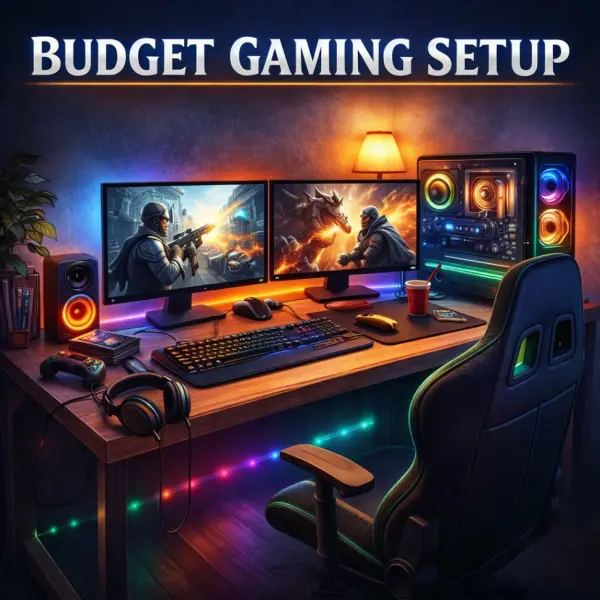
Build a Budget Gaming Setup That Works Without Overspending

How to Build Your Gaming Space on a Budget: Smart Setup Without Overspending

A gaming space does not necessarily require spending a lot of money, but it can be confusing when one does not know where to spend and where not to. But which should you put first, your PC or your desk? And which should you put first, your desk or your accessories? This blog eases the task by dividing the most crucial aspects of a gaming room environment and demonstrating the balance between performance, comfort, and cost. Even a tiny room and a modest budget can be transformed into a rewarding gaming environment with proper treatment.

The Components Explained

To start with, there are fundamental basics of a budget gaming setup, which should be known.

Game Tools

Game accessories are your PC/console, monitor, keyboard, mouse, headset, and controller. These have a direct impact on the perception and performance of games. When it comes to a budget buy, pay attention to responsiveness and comfort over a premium brand. A good mouse, a mechanical-type keyboard, and a set of headphones that sound good are usually more important than all the flashy RGB.

PC Gaming Setup

Balance is important to a low-end PC gaming setup. Rather than spending more money on a single expensive component, select components that complement each other. An SSD with less load time, enough RAM, and an adequate mid-range graphics card give a smoother experience than just looks. The solution is also upgradable in the future.

Gaming Room Setup

Your gaming room setup defines how enjoyable long sessions feel. Desk height, chair support, lighting, and cable organization affect comfort more than expensive décor. A clean, well-organized space improves focus and immersion without adding much cost.

Best Budget Gaming Desk

A budget gaming desk should offer stability and enough surface space for your monitor, keyboard, and mouse. You don’t need a specialized “gaming” desk—many simple study desks work just as well. What matters most is durability, depth, and legroom.

The Entry-Level Setup

The Functional Starter Space

This arrangement is about necessities and no more. This tier consists of a single-monitor desk, minimum peripherals, and a small PC or console. It is aimed at playing without mess and waste of money. You will make use of low-cost game devices and already existing furniture, maybe to be reused for other purposes.

The positives of this setup are its reliability and simplicity. The negatives are that it is not graphically pleasing or highly customizable. This would be ideal for students, casual gamers, or anyone setting up their first gaming area because it is all about functionality, not aesthetics.

The Balanced Budget Setup

The Practical All-Rounder

This is where quality upgrades come into play. A more durable desk, cable organization, and lighting quality enhance the experience without breaking the bank. You can also include a second monitor or an extended desk area for enhanced multitasking and immersion.

The benefit of this setup is comfort and organization. Your gaming space is deliberate and not just a temporary solution. What you forgo is high-quality materials and advanced furniture functionality, such as height adjustment. This level of setup is best for those who want a clean, comfortable gaming space that serves well for gaming and general use.

The Optimized Budget Space

The Smart Investor’s Setup

This setup prioritizes long-term value. You spend a bit more on products that enhance your daily comfort, such as an ergonomic chair, an extended desk, or enhanced ambient lighting. Wall-mounted storage, monitor risers, and basic soundproofing optimize space utilization.

The benefit of this setup is a gaming space that feels complete and immersive. The drawback is that it is not portable and is intended to remain in one location. This option is best for serious gamers who spend considerable time gaming and want a space that feels personal without entering the premium price range.

The Final Decision

Creating a budget-friendly gaming area is all about functionality and not necessarily about making a statement. Begin with quality game devices and a comprehensive computer gaming system. Select a gaming desk that is suitable for your gaming area and will also assist you in maintaining proper posture. Lighting, storage solutions, and comfort upgrades can be added to your gaming area at a later date instead of spending all the money upfront.

You can have an entry-level system to get you started if you are a beginner. A middle-of-the-road system is best for most gamers. A lean budget amount would be ideal if gaming is a regular part of your life. Just follow the above advice and allocate your spending according to your needs, and you will create a gaming room that is adequate, personalized, and affordable.

Disclaimer: The content on this blog is for informational and educational purposes only. While we aim to provide accurate information, we can’t guarantee its completeness or accuracy. The views expressed are those of the authors and may not reflect those of the blog.

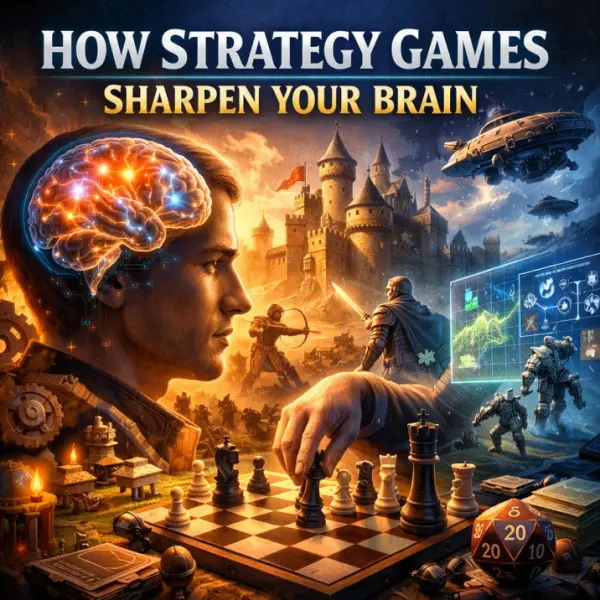
Gaming Meets Mind Training: How Strategy Games Sharpen Your Brain

To date, many think gaming is a distraction. Something that numbs the mind and restricts the thinking ability. But surprisingly, that is not true. Anyone who has spent hours planning the perfect game plan, managing limited resources or locked rewards, or even outsmarting a human opponent, knows the truth: some games don’t just entertain, they train, too. Gaming demands intense mental ability for real-time strategy classics to modern epics and city builders. They challenge the players to think ahead of time, analyze situations, remember too much information and use it when it’s time, multitask, adapt to changing conditions, and manage complex situations. It also helps gamers to focus, keep calm in panic situations, perform under stressful situations, and survive in adversities. Now tell me, aren’t these skills that we all need?

Why Strategy Games Are Different From Other Games

We have highlighted the importance of puzzles in our previous articles, and now it is time we look at what strategy games have to offer. Most of the games feed on reaction speed, hand-eye coordination, and recognizing pattern repetition. But contrary to this, strategy games slow the pace just enough to make thinking unavoidable. There are no reflexes at play, nor are there trained brain cells. Players are needed to carefully analyze the situations with whatever information they have, balance short-term gains against long-term goals, predict opponents’ actions, recover from mistakes, and optimize use of resources to survive. This constant need for mental engagement activates higher-order cognitive processes in the brain. And the result? A strengthened brain that does not stress anymore.

Strategic Thinking: Learning to Think Several Moves Ahead

Don’t we all need strategic thinking skills to run our lives smoothly, too? In the gaming world, too, strategic thinking is the heart of every game. Foresight is equally important while playing just as much as it is in real life. There is no denying that. So whether you are planning an expansion in a real-time strategy game, managing turns in a tactics game, or setting policies in a simulation, you will always find yourself asking: What happens next? This forward thinking that gets developed trains planning ability, anticipation, and consequence awareness. Gamers learn from the very beginning that actions have consequences. It causes a ripple effect. And hence, they move carefully. This habit soon gets absorbed by them and starts to reflect in their real lives, too. They are often people who are street-smart and know how to tackle their problems. 

Resource Management and Mental Discipline

You’d never see a gamer waste resources that they have. They very well know what is useful to them, and more often than not, use their resources in the best possible manner. And soon, this habit is seen in the way they function in their day-to-day lives, too. The essence of a strategy-based game is scarcity. You’d never have unlimited resources in these kinds of games. Hence, managing these systems strengthens prioritization skills, cost-benefit analysis, and risk assessment. Gamers learn to understand the worth of their resources and use them wisely. This mental discipline also gets carried into their real life, improving budgeting, planning, and project management skills.      

Decision-Making Under Pressure

Let’s be honest, we all must have failed sometimes or another because of the poor decision we took while under pressure, didn’t we? Strategy games often build pressure where you will have time to think, but not enough to start overthinking. And that is a quality that most of us lack. Sticking to deadlines and coming up with solutions in a specific time frame. This controlled pressure environment trains the brain to stay calm while evaluating options, avoid panic decisions, and commit confidently to a plan. And unlike reflex-based games, strategy games reward composure. These players learn to be thoughtful and wise. 

Pattern Recognition and System Thinking

These games are often built on systems like economic loops, tech trees, combat formulas, and AI behaviours. And to succeed, the player must be capable of understanding how these systems interact. And, this, in any manner, is not child’s play. Strategy games are known to strengthen pattern recognition, systematic thinking, and analytical reasoning. So instead of focusing on solo, isolated actions, players learn to see the bigger picture, which is often missed by people in real life. They learn to understand how multiple elements influence each other. These show how they understand relationship dynamics in their real life and know how actions impact the other differently. 

Multiplayer Strategy: Outsmarting Humans

Things get better when strategy games involve multiple players. With that, the cognitive challenges multiply. You are no longer standing against an AI version that you can outsmart with human tactics. You are against another human, and that makes everything so much more interesting. You are no longer solving puzzles and decoding grids; you are now reading human minds. The sound of it makes things so much more interesting, doesn’t it? Multiplayer games sharpen social reasoning, prediction and bluffing, and increase psychological awareness. Players learn to think probabilistically, anticipating not just what seems to be optimal, but also what an opponent may believe to be optimal.

Play Smarter, Think Sharper

Strategy games are ones that really pique my interest from time to time and make me obsessed. It challenges us to think ahead, manage complexities, and adapt under pressure, and helps sharpen the mind in humanly impossible ways. Whether you’re commanding armies, building civilizations, or optimizing resources, you’re doing more than playing.

Disclaimer: The content on this blog is for informational and educational purposes only. While we aim to provide accurate information, we can’t guarantee its completeness or accuracy. The views expressed are those of the authors and may not reflect those of the blog.

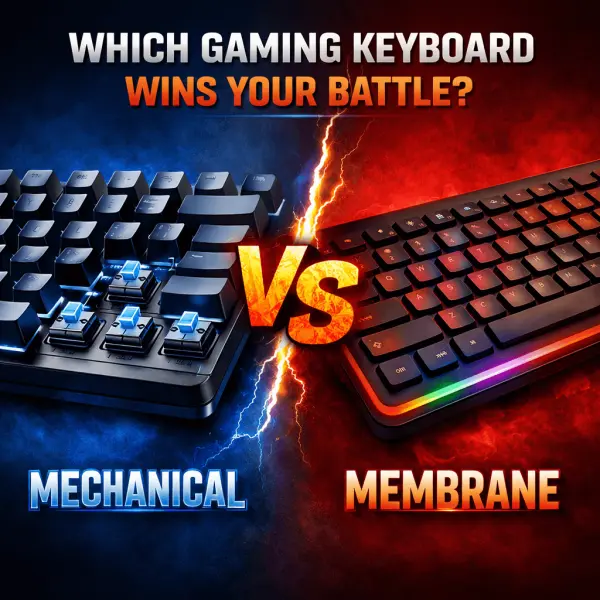
Mechanical vs Membrane: Which Gaming Keyboard Wins Your Battle?

I own a gaming laptop and was able to buy the one that works the best only recently. And that’s when I realised owning a perfect gaming keyboard is equally important. Now, one question that stuck around was whether a mechanical one was better or a membrane one? So I thought of asking my senior gaming friends, but each one had their own opinion, and I was confused. Some swore that mechanical keyboards had changed their lives. Others insisted that membrane keyboards are quieter, cheaper, and just fine. But I realised that the truth, as usual, lies somewhere in between.

Like me, if you have ever wondered which keyboard actually sits well for your gaming style, budget, and setup, I think this guide will really help you make the right choice. So stick around.

Understand the Basics Of Mechanical vs Membrane Keyboards

Before choosing sides, let us get a clear picture of what separates mechanical and membrane keyboards in the first place.

A mechanical keyboard uses individual mechanical switches under every key. Each switch has moving parts, usually a stem, spring, and housing, nothing that you’d be bothered about, but it’s good to know, and it registers every keystroke with precision. These switches come in different types: linear, tactile, and clicky, offering a distinct feel and sound. This is why mechanical keyboards feel more “alive” and responsive compared to regular keyboards.

On the other hand, a membrane keyboard uses a single rubber or silicone layer beneath the keys. When you press a key, it pushes the membrane down to complete a circuit. Remember the feel of the first Nokia phone, where all the keys were blended? A membrane keyboard feels something similar. Most laptops and budget keyboards use this technology. It’s quieter, softer, and far cheaper to manufacture, but it also feels very different.

Performance: Does One Actually Make You Play Better?

Let me stop you and tell you right here that a mechanical keyboard won’t make you a pro-gamer overnight! But it can improve consistency, comfort, and reaction over time. According to me, mechanical ones work better because they offer faster and more consistent key actuation, better feedback: you know exactly when a key is pressed, and support advanced features like N-key rollover and anti-ghosting. And, in fast-paced games like FPS titles, MOBAs, or battle royales, that reliability does matter.

But I also wanted to use a membrane keyboard just to be sure, and that is exactly what I did. I borrowed a friend’s for a month and checked for myself. They can handle gaming just fine, especially for casual players. Modern membrane keyboards have improved a lot and often include gaming features like backlighting and anti-ghosting. However, key presses feel less precise, the actuation force varies over time, and missed inputs are more common in intense scenarios, which is something that puts me off. 

Typing Feel: The Real Deal-Breaker

Now, the only reason you’d find yourself preferring a membrane keyboard over mechanical ones is because of the typing noise that mechanical ones cause. If you are looking for a keyboard that’d make zero or little noise while you passionately press those keys, go for membrane keyboards. Membrane keyboards are mushy, cushioned and offer low-resistance and hence, may feel comfortable. 

Sound: Clicks vs Silence

If you share a room like me, then the amount of sound your keyboard makes is an important factor that you may want to consider.

While mechanical keyboards are factually louder, especially during key switches, noticeable on voice calls, and may be distracting to others, linear and silent switches come with a membrane keyboard. So consider your choice accordingly. They are naturally quiet, ideal for shared spaces, and less intrusive during late-night gaming sessions. 

Durability: Built to Last or Built to Replace?

Mechanical switches are designed to last 50-100 million keystrokes per key. Let me do the calculation for you! This means you get years of heavy gaming, minimal performance degradation, and keys that feel consistent even after long use. They are a long-term investment. Now, if you evaluate a membrane keyboard on that same parameter, they may usually last up to 5-10 million keystrokes per key. That is 90% less. Keys start to feel softer, responsiveness drops, and certain keys might just pop or stop registering. They are fragile and not for long-term usage.

Price: The Deciding Factor for Many Gamers

Many of us are often still dependent on our parents’ income while we are in our initial gaming phase. Hence, this one is the most crucial among all considerations. Obviously, by now, you’d know that mechanical keyboards are more expensive ones. They offer complex, but durable mechanisms which cost more, have higher build quality, and allow customization options if you need fancy, flashy ones. Entry-level models may still be affordable, but premium ones cost a bomb. 

On the other hand, membrane keyboards are comparatively affordable, widely available, and are often bundled with gaming PCs. So if you are a gamer, but on a tight budget, go for a membrane keyboard.

Final Verdict: There Is No Universal Winner

See! Now you understand why, at the start, I told you that the truth about mechanical keyboards being better than a membrane keyboard and vice versa lies somewhere in between. There is no single winner here. The best one is the one that fits your needs and budget. Sure, mechanical ones dominate performance, durability, and customizations, but membrane keyboards are preferred when affordability, quietness of operation, and simplicity are in question.  

If gaming is a serious hobby or passion, mechanical keyboards are worth the investment. If gaming is a way to relax after work or college, a good membrane keyboard can serve you perfectly well. At the end of the day, skill comes from practice, and not from the keyboard. But choosing the right one can make every battle feel just a little smoother.

Disclaimer: The content on this blog is for informational and educational purposes only. While we aim to provide accurate information, we can’t guarantee its completeness or accuracy. The views expressed are those of the authors and may not reflect those of the blog.

Next-Level Controllers & Add-Ons You Can’t Ignore in 2026

Think about the last time you barely lost a fight. Was it your reaction, or did your gear hold you back? There’s a quiet truth in competitive gaming: the player and their tool become one. While everyone uses what comes in the box, winning often demands something better. The right next-level controller isn’t a luxury; it’s the bridge between your strategy and flawless execution.

This is finding your perfect handshake with the game. That’s about precision that feels like an extension of your intent, and immersion that pulls you past the screen. Let’s take a look at the hardware that makes that happen.

The Console Purist’s Upgrade: HyperX Clutch Gladiate

For the Xbox gamer who trusts official hardware but craves an edge. The HyperX Clutch Gladiate takes that familiar, reliable Xbox feel and layers on smart, competitive features. It’s all about efficiency. The dual trigger locks are a game-changer, letting you switch to a short-pull hair trigger for shooters in an instant. The real magic, though, is in the programmable rear buttons. Mapping your sprint or slide to a back paddle means your right thumb never leaves the stick. It’s a simple change that creates a tangible competitive edge. This precision gaming controller turns clumsy manoeuvres into seamless motion.

The Tinkerer’s Dream: PowerA OPS v1 Wireless Controller

If you play across PC, cloud, and mobile, you need one controller to rule them all. The PowerA OPS v1 is built for that life. Its triple connectivity is just the start. The headline here is the Hall Effect thumbsticks and triggers. This technology uses magnets, not physical contact points, to register movement. The result? Forget stick drift. This controller offers precision you can trust, long-term. Combined with mappable buttons, adjustable trigger locks, and a turbo function, it’s a highly customizable controller that lets you build a unique profile for every game you play.

The Specialist’s Instrument: Logitech Extreme 3D Pro Joystick

Some games demand the right tool. For soaring through flight sims or navigating the cockpit of a spaceship, a standard gamepad falls short. The Logitech Extreme 3D Pro is that right tool. It’s the affordable, time-tested entry into proper joystick control. The heft of its base keeps it planted, while the 12 programmable buttons and 8-way hat switch put a universe of commands under your fingers. This is the quintessential pro gaming add-on for immersion, transforming complex simulations into intuitive, thrilling experiences.

The Universal Performer: COSMIC BYTE Ares Pro

Why juggle different pads for different devices? The COSMIC BYTE Ares Pro answers that by being exceptionally capable everywhere. It connects to PC, Android, and iOS wirelessly or wired, always ready. It brings premium hallmarks like Hall Effect joysticks and a blazing-fast 1000Hz polling rate to a versatile package. The dedicated macro button is a secret weapon for fighting games or MMOs, letting you execute a combo with one tap. For the gamer who values high performance across every screen, this wireless gamepad is a brilliantly flexible choice.

The Driving Simulator: Thrustmaster T98 Ferrari

For racing games, a controller is a compromise. The Thrusmaster T98 Ferrari is the end of that compromise. This isn’t just playing a game; it’s feeling the road. Meticulously modelled after the actual Ferrari 296 GTB steering wheel, it instantly drops you into that cockpit mindset. The genius is in its straightforward bungee cord technology, which provides reliable auto-centring and a surprisingly responsive feel without complex motors. The ability to switch between rally, single-seater, and GT sensitivity modes lets you tailor the handling to your game with a flick of a switch. This is the definitive immersive racing wheel, an investment that doesn’t just improve lap times but fundamentally changes how you experience every race.

Finding Your Fit

Choosing your controller is the most personal hardware decision you make. It’s the piece of gear you physically connect with for hours. It should fit your games, your platform, and your desire to improve. These best gaming controllers and pro gaming add-ons are not flashy gimmicks. They address real in-game problems: trigger latency, stick drift, inconsistent rumble and lack of custom inputs. Pick equipment that matches your playstyle, and that gear will reward you with steadier aim, cleaner combos and faster lap times. For competitive players who want tools that truly matter, these controllers and accessories are worth the upgrade.

Disclaimer

The content on this blog is for informational and educational purposes only. While we aim to provide accurate information, we can’t guarantee its completeness or accuracy. The views expressed are those of the authors and may not reflect those of the blog.